Showing posts with label Extra Credit. Show all posts

Thursday, April 19, 2018

Week 13 Extra Credit Reading: The Golden Arrow


  • Sheriff of Nottingham disliked Robin Hood
  • Reported to King Richard about his losses
  • King replies that Sheriff of Nottingham is the sheriff, should come up with some "tricking game" to deal with the rebels
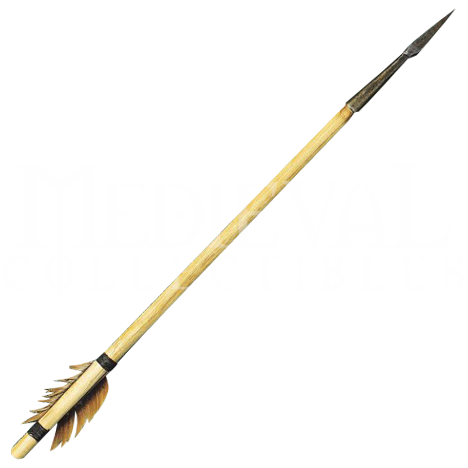
    • There were bowmen in the outlaws, so prize would be an arrow with a golden head and silver shaft
  • Robin Hood wishes to go, but David of Doncaster tells him that the match is a trick
    • Robin Hood insists on going, calling David a coward
  • Gang disguised themselves to attend
  • Sheriff and others could not find Robin Hood among the competitors
    • Sheriff insults Robin Hood, who was irritated but did not reveal himself
  • Robin Hood won the contest, wanted to reveal to the Sheriff that he won it
    • Happened back in Greenwood
  • Little John suggested writing a letter, and Robin Hood sent it by attaching it to an arrow and shooting it into town
Bibliography: Robin Hood and the Golden Arrow from The English and Scottish Popular Ballads by Francis James Child. Web Source.

Image: Arrow Bow from pngimg. Web Source.

Sunday, April 1, 2018

Week 10 Extra Credit Reading: The Jealous Father

  • Aioswé had two wives
    • Polygamy was accepted by the Cree?
  • Had one son by one of the wives
  • Aioswé was jealous of his son
    • Jealous of...? Wife's attention, something else?
  • Aioswé found marks on one of his wives (not the son's mother) which made him believe son had been intimate with her
  • Aioswé went to an island with his son to hunt eggs, and kept sending the son further and further inland for eggs until the son went far enough that Aioswé could paddle away in the canoe and leave the son behind
  • Son cried for hours until Walrus appeared
  • Walrus offered help, but asked son to warn Walrus if he heard thunder because he had to go underwater if lightning came
  • Son lied about sky (was cloudy, said it was clear) and then about a peal of thunder
  • Walrus heard thunder again and got angry at Aioswé's son and dropped him
  • Water was already shallow and boy lived, but Walrus was killed by lightning
  • Aioswé's father had sent storm, Aioswé's mother had sent Walrus
    • Father was on Aioswé's side, Mother was on the son's side
  • Old woman sent by Mother gave the son instructions on how to act if he wanted to reach home
  • Gave him a stuffed ermine skin as a 'weapon to protect himself'
  • Son came across a wigwam with two blind old hags who used to kill everybody they met(sent by his father)
    • Aioswé or Aioswé's father? Latter sent the thunder storm, but "his father" implies Aioswé, the son's father
  • Son is suspicious of hags when they invite him in
    • Because of their elbows - hags are mentioned to have "sharp bones like daggers protruding from the lower arm at the elbow"
  • Son tricked hags into killing each other by putting a piece of parchment on a pole and poking it between them
  • The two hags slashed at the parchment with their elbows and ended up stabbing each other to death
    • Hags can sense son's approach with magic but can't sense that he didn't actually sit between them?
  • Son proceeds and comes across bones on the path (trap by people nearby, who would kill whoever disturbed the bones)
  • Son's advice from the old woman had been to dig a tunnel underneath the bones
  • Son was careless, accidentally rattled the bones while digging
  • People gave up searching when they could not find the son underground, but dogs kept searching until they found the hole
  • Aioswé's son used the stuffed ermine skin to trick the people into thinking the dogs had lied about it being the son, and the people killed the dogs
    • Apparently the people and dogs were specifically after the son as well? Does not mention that they were sent by anyone, though
  • The son returned home
  • Son sang a song about the burning of the world, Aioswé sang against him but was not strong enough
  • Son shot an arrow into the woods and set them on fire
  • When Aioswé argues that son did not set the water on fire (like he had said he would - "make all the lakes and rivers boil"), the son shot an arrow into the water and made it boil
  • Son told his father that he would be safe from the fire in the fat basket (basket with bear's grease in it)
  • Son put his mother in a circle and she was safe, while Aioswé burned to death in the basket
  • Son and his mother transformed into birds, mother into a robin and son into a whisky jack
    • Escaping the world? Fed up with humans? No motivation given besides "Let us become birds"
    • Other wife is ignored besides a mention in beginning and a mention when the son returns

Bibliography: The Jealous Father from Tales of the North American Indians by Stith Thompson.

Wednesday, March 7, 2018

Week 8 EC Reading Notes: Stories from Le Morte D'Arthur and the Mabinogion (A)

Of Arthur's Birth; And How He Became King

 Disneyland Sword in the Stone, by Dave Q from Wikimedia Commons
  • Uther Pendragon ruled Britain
  • Fell in love with Igraine of Cornwall, got rejected and fell ill
  • Merlin offers to help Uther if Uther's son is given to him at the son's birth
  • Uther agrees and Merlin gives Uther "the form of one whom Igraine had loved dearly"
    • Igraine then marries Uther
  • Merlin shows up to remind Uther about the deal 3 days before Arthur is born
  • When Arthur is born, Uther commands for him to be taken to the 'postern-gate' to be given to an old man (Merlin)
  • Uther fell sick not long after, gathered all his knights and barons and commanded them to obey his son
    • By Merlin's suggestion
    • Also says that his curse would be on his son if Arthur didn't take the throne
  • Few people had seen Arthur, and were unwilling to be ruled by a child
  • Civil war erupted
  • Merlin had taken Arthur away to keep him safe from the upcoming civil war (which he had foreseen)
  • Merlin gave Arthur to Sir Ector to raise alongside Ector's son Kay
    • Didn't tell Ector that Arthur was Uther's son
  • When Arthur was older ("tall youth"), Merlin advises the Archbishop of Canterbury and told him to call together "all the chief men of the realm"
    • Merlin put a curse on the Archbishop to get him to comply
  • When the men gathered, they saw a sword thrust through an anvil on a giant stone in front of the church
    • Stone had "Whoso can draw forth this sword, is rightful King of Britain born" written on it
  • Everyone present tried and failed to draw the sword
  • Jousts were to be held in London at Easter for knights to show off their skill and try to draw the sword
  • Ector rode to London with Kay and Arthur
  • Kay and Arthur rode out, but Kay forgot his sword
  • Arthur went back but the house was locked up
  • Arthur thought of the sword in the stone and went to grab it
    • Guards were gone due to tournament
  • Arthur draws the sword and brings it to Kay, who shows it to Ector
  • Ector and Kay pledge loyalty to Arthur
  • They go to Archbishop and tell him what happened
  • Arthur puts sword back in and draws it twice
    • Others try to draw it after Arthur puts in back in the second time, but all fail again
  • Arthur is sworn in as king
---------

(Reading is from Coming of Arthur up to How the Scabbard Was Lost)

Bibliography: Of Arthur's Birth; And How He Became King from Stories from Le Morte D'Arthur and the Mabinogion by Beatrice Clay. Web Source.

Sunday, March 4, 2018

Week 7 EC Reading: The Gilgamesh Epic


The Birth of Gilgamesh (No Notes, not a specific story)

Eabani (No Notes, not a specific story)

Gilgamesh as Tyrant:
  •  Gilgamesh fulfilling "double rôle of ruler and oppressor" of Uruk
    • Pressed young men into service in building a wall
    • Takes women to his court
  • People pray to the gods, specifically goddess Aruru, to make a hero who would force Gilgamesh to treat them better out of fear
  • Aruru takes a piece of clay and casts it upon the ground, creating Enkidu
  • Enkidu was covered with hair, had long luxurious hair
  • Enkidu lived in harmony with wild animals, and knew nothing of the land or of people
The Beguiling of Eabani:
  •  Hunter named Tsaidu encountered Enkidu
    • Possibly sent by Gilgamesh to entrap Enkidu and bring him back to Uruk
    • Possibly completely accidental
  • Tsaidu returns to Uruk and tells Gilgamesh about Enkidu
    • Enkidu was strong and fleet, but also shy at sight of another human
  • Gilgamesh seems to know why Enkidu was created, and wants to go against the gods' plans
  • Sends Tsaidu back to the mountains with Ukhut, a sacred woman of the temple of Ishtar, to seduce Enkidu and convince him to return to Uruk with her
  • Ukhut's beauty enthralls Enkidu, and he spends a week with her
  • Realizing he no longer belonged with the beasts, Enkidu goes along with Ukhut when she tries to convince him to go to Uruk and meet with Gilgamesh
    • He finds the idea of befriending Gilgamesh delightful
Gilgamesh Meets Eabani:
  • Feast of Ishtar was happening when the trio (Enkidu, Ukhut, Tsaidu) returned to Uruk
  • Enkidu thought that he would have to fight Gilgamesh before befriending him, but refrained through a warning that Gilgamesh was stronger than him
    • Warning could have been a dream or from Ukhut
  • Meeting is not detailed, but Enkidu and Gilgamesh meet and become friends
  • Enkidu laments loss of former freedom, aims his hate at Ukhut
  • Shamash (sun-god) talks to Enkidu and convinces him of the benefits
    • Unclear if dream or vision
    • Shamash talks of the benefits Enkidu already has, and tells Enkidu that Gilgamesh will provide Enkidu with a wonderful couch to sleep on and give Enkidu a seat at his left hand
  • Enkidu stops being upset at his current situation
  • Enkidu then receives a vision/dream about Khumbaba, a monster in the Forest of Cedars
    • Khumbaba was also a "guardian of the abode of the goddess Irnina (a form of Ishtar)"
  • Gilgamesh and Enkidu go to the priestess Rimat-belit (Gilgamesh's mother) and seek protection from Shamash for their adventure
The Monster Khumbaba:
  •  Khumbaba:
    • Terrifying creature that saps the strength and vitality of any who enter the forest
    • Bel appointed Khumbaba to guard a specific cedar tree
  • Enkidu complains that he feels weak upon nearing the forest, but Gilgamesh encourages him
  • The pair receive a dream foretelling of Khumbaba's death when they enter the forest and go forth, successfully slaying Khumbaba
Ishtar's Love for Gilgamesh:
  • Gilgamesh and Enkidu returned to Uruk victorious
  • Gilgamesh dressed himself in kingly clothes upon their return
  • Ishtar fell in love with Gilgamesh after witnessing him, and proposed to Gilgamesh
    • She promised many gifts if he did so - increased flocks and herds, "his horses and oxen would be without rival", other kings/princes would bring tribute to him
  • Gilgamesh rejected and taunted Ishtar due to her past treatment of lovers
    • Tammuz, "to whom she clung weepingly year after year"
    • Alalu the eagle
    • "A lion perfect in might and a horse glorious in battle"
    • Tabulu, a shepherd
    • Isullanu, the gardener of Ishtar's father
  • Ishtar had treated her previous lovers poorly and mocked them
    • Gilgamesh believed that he would be treated similarly if he accepted Ishtar's proposal
  • Ishtar was furious at the rejection and went to her father Anu
    • Seems as if she lied and made it sound as if Gilgamesh tried to court her instead of the other way around
The Bull of Anu:
  • Ishtar begged her father to send a mighty bull against Gilgamesh
  • Anu refused at first due to the fact that it would cause "seven years' sterility on the earth", but eventually agreed
  • Great bull, Alu, was sent to battle Gilgamesh
  • Text about the battle is missing but Gilgamesh was able to finally kill the beast
  • Ishtar went onto the wall of Uruk and cursed Gilgamesh for angering her and killing the bull from heaven
  • When Enkidu heard the curse, he tore out the entrail of the bull and threw them in front of Ishtar, telling her:
    • "As for thee, I will conquer thee, and I will do to thee even as I have done to him"
    • Direct threat that Enkidu will kill Ishtar
  • Gilgamesh dedicated the horns of the bull to the sun god and returned to Uruk
  • Possible that Enkidu was sent a dream in which Ukhut (who was now dead) told him of the underworld (Hades)
    • Described as "a path whose way has no return", place where inhabitants are cut off from light, and only dust exists without food or water
File:Near Eastern - Cylinder Seal with Enkidu Vanquishing the Bull of Heaven - Walters 42786 - Side B.jpg
The Death of Eabani:
  •  Enkidu falls ill and dies twelve days later
    • Possible that Enkidu was wounded
    • Possible that Enkidu was cursed to die outside of battle, likely by Ishtar
  • Gilgamesh grieves Enkidu's death
The Quest of Gilgamesh:
  • Gilgamesh became terrified of death and went in search of Ut-Napishtim, his ancestor who might know of a way for Gilgamesh to escape death
  • Gilgamesh set out and had to pass through mountain gorges full of wild beasts
    • Sin, the moon-god, helped him make it through safely
  • Gilgamesh arrived at the mountain Mashu ("the Mountain of the Sunset") which lay between the earth and the underworld on the western horizon
  • The entrance was guarded by scorpion-men (monsters)
  • Gilgamesh was overcome by fear when he saw them, but answered their questions about why he came
    • Scorpion-men only didn't kill him due to his divine heritage
  • Scorpion-men advised he turn back when they learned he sought Ut-Napishtim
  • They told Gilgamesh that he would have to go through twenty-four hours of darkness until he re-emerged into the light of day, and refused to let him pass
  • Gilgamesh begged them (with tears) to let him through, and they eventually did so
  • Gilgamesh ended up in a garden of trees that carried precious stones as fruit and leaves (?)
  • Gilgamesh encountered the sea-goddess Sabitu, who retreated into her palace and shut the gate
  • He threatened to break down the door until she opened it and aided him
    • Gilgamesh knew that her help was necessary to reach Ut-Napishtim
  • She sent Gilgamesh to Adad-Ea (Ut-Napishtim's ferryman)
  • Adad-Ea advised Gilgamesh to turn back as well, but agreed when Gilgamesh started destroying Adad-Ea's boat with an axe
    • Adad-Ea forced Gilgamesh to go find a new rudder before they set off
Gilgamesh and Ut-Napishtim:
  • Gilgamesh contracted a grievous illness and could not leave the boat when they arrived at Ut-Napishtim's home
  • Gilgamesh didn't believe Ut-Napishtim when he tried to tell Gilgamesh that death was the fate of mankind and controlled by the gods
  • Ut-Napishtim told Gilgamesh the story of the Babylonian Deluge Myth

Deluge Myth (No Notes, not a story I will focus on)

Gilgamesh and the Plant of Life (no section header in source):
  • Deluge myth proved to Gilgamesh that unlike his previous belief, his situation was not the same as his ancestor's
    • Ut-Napishtim was given the blessing of Bel after he saved humanity when Bel wanted to flood the world, due to Bel being convinced by the other gods that his actions were an overreaction
  • Ut-Napishtim took pity on Gilgamesh and healed him
    • Gilgamesh slept for a week
    • Ut-Napishtim's wife made a magic "preparation" with seven ingredients and gave it to Gilgamesh
    • When Gilgamesh woke, Ut-Napishtim sent him to a magic spring to finish healing him
  • Gilgamesh returned and was still insistent on his quest for immortality
  • Ut-Napishtim sent Gilgamesh with Adad-Ea to the location of the plant of life
    • Plant would give immortality and eternal youth to whoever ate it
    • Plant was a weed at the bottom of the ocean that would prick the hands of the gatherer
  • Gilgamesh found the plant of life and set out to return to Uruk, accompanied by Adad-Ea
  • When Gilgamesh stopped at a well of fresh water, a snake stole the plant and Gilgamesh wept at the loss
Eabani's Spirit (no section header in source):
  •  Gilgamesh still grieving Enkidu's loss
    • "Thou canst no longer stretch thy bow upon the earth; and those who were slain with the bow are round about thee. Thou canst no longer bear a sceptre in thy hand; and the spirits of the dead have taken thee captive. Thou canst no longer wear shoes upon thy feet; thou canst no longer raise thy war-cry on the earth. No more dost thou kiss thy wife whom thou didst love; no more dost thou smite thy wife whom thou didst hate. No more dost thou kiss thy daughter whom thou didst love; no more dost thou smite thy daughter whom thou didst hate. The sorrow of the underworld hath taken hold upon thee."
    • Implies Enkidu had a wife and daughter? Love-hate relationship with the wife and daughter, or just pointing out that Enkidu can no longer show love or anger towards his closest family members?
  • Gilgamesh went to multiple temples to pray for Enkidu's return
    • Ninsum, Bel, Sin
  • Eventually Ea took pity on Gilgamesh and persuaded Nergal to bring forth Enkidu's spirit from Hades
  • Enkidu couldn't tell Gilgamesh what he'd seen in the underworld but could describe the general conditions
    • People who were taken care of properly (buried, offerings made) and/or slain in battle have ideal afterlives
    • People who were not either have miserable afterlives
-------------

Bibliography: The Gilgamesh Epic from Myths & Legends of Babylonia & Assyria by Lewis Spence. Web Source

Image: Near Eastern - Cylinder Seal with Enkidu Vanquishing the Bull of Heaven - Walters 42786 - Side B, anonymous artist from the Middle East, from the Walters Art Museum. Image Web Source

Thursday, February 8, 2018

Reading Notes (EC): Aesop's Fables


The Fox and the Goat
  • The fox fell into the well through bad luck
    • Could alter the story; could be a bad decision of the Fox's that led to his situation
  • Fox convinces Goat that there is a drought coming and that was why he jumped down
    • Fox is pretending that his mistake (possibly bad decision in the retelling) was a purposeful and positive decision
    • Could change the decision and reasoning in the rewrite - possibly more convincing (I find this argument to be bad, and the Goat falling for it says more about the Goat's willingness to trust the Fox/inability to think critically than the Fox's cleverness)
  • When Goat jumps down to join the Fox, the Fox immediately escapes
    • Didn't waste time down in the well - did not trust the Goat not to realize the deception immediately
  • Fox taunts Goat once he's out
    • Could turn this into a proper "villain monologue" - not exactly a necessary or particularly strong addition, but writing villain monologues is fun and the Fox is already doing a minor version at the end with the moral of the fable
File:Zakariya ibn Muhammad Qazwini - A Fox and a Young Billy Goat - Walters W65998B - Full Page.jpg

Biography: The Fox and the Goat from The Fables of Aesop, pg. 82, by Joseph Jacobs. Web Source.

Image: A Fox and a Young Billy Goat, Wikimedia Commons

Thursday, January 25, 2018

Reading Notes: Myth-Folklore Anthology (Extra Credit)


The Man in the Moon
  • Plot:
    • Blacksmith constantly wants to be new things, dislikes each new role
      • Blacksmith -> Stone -> Stone-cutter -> Sun -> Moon
    • Tries to go back to blacksmith after being the moon
    • Wise man refuses, leaves him as the moon
  • Characters
    • Blacksmith: constantly discontent with each role for various reasons
    • Wise Man: changes blacksmith with each request, becomes fed up and leaves blacksmith as the moon
  • Main Themes/Ideas:
    • Blacksmith is never content - other roles always seem better than the one he currently has, but once he is put in them, he sees the negative parts that he didn't from the outside
    • Wise Man is willing to help the blacksmith up until a point, when he grows tired of helping someone who doesn't seem to ever like their role. Blacksmith wanting to return to being a blacksmith tells Wise Man that Blacksmith doesn't care about what has been done for him
The Hare that Was not Afraid to Die
  • Plot:
    • Buddha born as a hare
    • Teaches friends (Monkey, Jackal, Otter) about morality, charity, keeping holy days
    •  Tells friends to give from their own store of food to beggars on fast day
    • Otter takes fisherman's fish, Jackal takes lizard and pot from a field watcher, Monkey gathers mangoes
    • Hare decides to give his own flesh due to owning no other food
    • King of the Gods disguises self as Brahmin, goes to each animal
      • Otter offers the fish, does not admit the theft
      • Jackal offers lizard and pot, admits the theft
      • Monkey offers mangoes
    • Brahmin tells all three to wait until tomorrow before he sees to it
    • Brahmin goes to Hare
    • Hare offers flesh
      • Hare tells Brahmin not to take his life on a holy day
      • Instead, Brahmin should build a fire and let the Hare jump into it of his own volition
    • When Hare jumps in, Brahmin reveals himself as King of the Gods and admits it was a test of Hare's virtue
    • King of Gods puts image of hare on moon as a sign of Hare's virtue
  • Characters:
    •  Hare: reborn Buddha, willing to sacrifice self to uphold the "moral law"
    • Animal friends: all trying to stick to what Hare has taught, but misguided? Went and gathered food rather than offering from their own stores of food
    • King of Gods: tested Hare's virtue
  • Main Themes/Ideas:
    • Be willing to give up everything for the sake of others
    • Life is just one more thing that can be used to help others
      • Hare does not consider death as something to be feared, main argument for not letting Brahmin kill him was that it was a holy day

Image Information: Pixabay; Rabbit in the Moon.


The Eight-Forked Serpent of Koshi
  • Plot:
    •  Susa-no-wo journeys to see what type of people live above him
    • Finds a deity of earth, Ashinadzuch, his wife, Tenadzuchi, and their daughter, Kushinada-hime
    • They are grieving the loss of their eight daughters who were slain each year by the eight-forked serpent of Koshi, and the fact that it will come for their last daughter as well
      • Serpent is a huge red-eyed monster with eight heads and tails, with trees growing over its back
    • Susa-no-wo agrees to kill serpent in exchange for Kushinada-hime's hand in marraige
      • Susa-no-wo tells them he is the brother of Amaterasu when they do not know his name
    • Susa-no-wo transforms Kushinada-hime into a comb and puts her in his hair, has Tenadzuchi brew eightfold strength sake, and hangs eight doors with a vat of sake in each
    • Serpent arrives and drinks sake from each door with each head, eventually falling into a drunken sleep
    • Susa-no-wo draws his sword and cuts apart the serpent, finding the divine sword Kushanagi in its tail
    • Transforms Kushinada-hime back and marries her
  • Characters:
    •  Susa-no-wo: god of seas and storms, requires reward for doing hero work, willing to rely on tricks to win
    • Orochi: eight-forked serpent of Koshi, the main threat, able to be tricked easily (believed sake to be tribute?)
    • Ashinadzuch and Tenadzuchi: parents of Kushinada-hime, willing to give her away in marriage if it means she lives
    • Kushinada-hime: essentially has no role but as a reward for Susa-no-wo (disappointing, but unfortunately expected)
  • Main Themes/Ideas:
    • Outwitting monsters instead of overpowering
    • Let the enemy defeat themselves


The Indian Who Wrestled with a Ghost
  • Plot:
    • Young man hears an owl while approaching a forest
    • Lays down to rest near another forest
    • Awakened by the voice of a woman crying for her son
    • Remains where he is, rips hole in blanket to peep through
    • Woman arrives, checks if man is alive (he plays dead)
    • When she tries to cut his foot, he jumps up and she runs
    • Man does not sleep, and sees a burial scaffold in the morning
    • Young man comes to another forest, hears singing
    • Man shouts to singer, gets no answer
    • Singer comes and asks for food, young man lies and singer calls him on the lie
    • Singer is a ghost, has no flesh - noticed when he smokes
    • Ghost challenges man to wrestle
    • Young man throws brush on the fire before agreeing
    • Ghost was stronger away from fire, young man won by pushing brush into fire
      • Ghost fell to pieces
    • After winning wrestling, statement made by ghost ("if you can throw me, you shall kill the enemy without hindrance and steal some horses") came true
  • Characters:
    • Young man: smart, able to prepare (brush near fire)
    • Ghost: not sure here - the first ghost seems to have no real purpose other than to make the young man aware ghosts exist, and the latter seems to do many things
  • Main Themes/Ideas: 
    • Believe what ghosts say


Pygmalion
  • Plot:
    • Pygmalion saw women as wicked and chose to be a bachelor
    • He carved a figure and fell in love with it
    • He treats it with 'love' (kissing, speaking, holding, dressing it, etc.)
    • Goes to Venus's festival and prays for the figure to become real
    • Venus grants the prayer, and Pygmalion returns home to find the girl has become real
    • Venus attends the marriage between Pygmalion and the figure-turned-real, and the new woman bears a son named Paphos 9 months later
  • Characters:
    • Pygmalion: sees real women as wicked, falls in love with a carved figure, wishes it to be real and then marries and has a kid with the newly created woman
    • Venus: grants Pygmalion's wish to have the figure he loves turned into a real woman for him to marry
    • Ivory Woman: figure carved by Pygmalion, marries him once she becomes real
  • Main Themes/Ideas:
    •    Paphos takes its name from the son created from Pygmalion and the Ivory Woman
The Tiger, The Brahman, and the Jackal
  • Plot:
    •  Tiger caught in trap, found by Brahman
    • Tiger swears to serve Brahman as a slave if freed
    • When freed, Tiger decides to eat Brahman instead, but agrees to abide by decision of first 3 things Brahman questions about justice of Tiger's actions
      • Papal-tree: tells Brahman to man up, trees get branches torn off to feed cattle
      • Buffalo: gets mad at Brahman, buffalos are treated poorly once milk dries up
      • Road: 'I get trampled on every day and get nothing'
    • Comes across Jackal on the way back, Jackal doesn't seem to understand
    • Jackal and Brahman return to Tiger, Brahman explains story to Jackal
    • Jackal continues to misunderstand, enraging the Tiger
      • Jackal doesn't understand how the Tiger got into the cage, Tiger demonstrates
      • Jackal shuts the door once Tiger is in the cage
  • Characters:
    •  Brahman: tries to do a kind act (freeing Tiger) but ends up in danger, naive, wants to live but doesn't know how to convince tiger
    • Tiger: treacherous, wants to eat Brahman, easily manipulated (agreed to abide by decision of three things although could've been lying again, Jackal convinces Tiger to get back into cage)
    • Jackal: wily, helpful (saves Brahman from Tiger but also doesn't fill Brahman in on the plan)
  • Main Themes/Ideas:
    •  People can be manipulated by trying to show off how smart they are and make others understand something
The Lion's Share
  • Plot:
    •  Lion went hunting with three others
    • Found a stag and killed it
    • Quartered the stag, but then took all quarters
  • Characters:
    •  Lion: arrogant, cruel, king of beasts
    • Fox: angry with Lion
  • Main Themes/Ideas 
    •  People in power will often not properly reward/credit those under them for the work they did
Androcles and the Lion
  • Plot:
    • Androcles comes across a Lion moaning
    • Lion has thorn in the paw
    • Androcles takes out thorn and binds paw
    • Lion takes Androcles to cave, brings him food
    • Lion and Androcles captured, Androcles thrown to the Lion
      • Lion went days without food
    • Lion refused to eat Androcles
    • After hearing the story of the two, the Emperor freed both
  • Characters:
    • Androcles: willing to help the Lion
    • Lion: grateful for Androcles saving him, refused to harm the person who helped him
    • Emperor: recognized the significance of both Androcles and the Lion's actions, freed them both
  • Main Themes/Ideas 
    •  Those who show gratitude for help received are good people ("noble souls")
  The Lion and the Statue
  • Plot:
    • Man and Lion discussing strength of men and lions
    • Man argues superiority of man due to intelligence
    • Man shows statue of Hercules overcoming a Lion
    • Lion responds that it proves nothing
  • Characters:
    • Man: overly confident in man's superiority
    • Lion: aware that not everything should be believed at face value
  • Main Themes/Ideas 
    • History is written by the victors: just because a record exists doesn't make it true, "author bias" - whoever created something has an inherent bias (man made statue of Hercules killing a Lion, man has bias towards strength of men over lions)

The Lion in Love
  • Plot:
    • Lion falls in love and proposes to maiden
    • Father says that they are honored, but worried for daughter's safety - Lion should remove fangs and claws to not hurt the maiden
    • Lion does so, parents laugh in his face when he returns
  • Characters:
    • Lion: in love, willing to weaken himself to be with maiden
    • Parents: trickery, convince Lion to weaken himself so that they could safely refuse
    • Maiden: apparently unimportant because we never have anything from her
  • Main Themes/Ideas 
    • Love can convince people to do things that they never would otherwise: Lion is willing to get rid of his teeth and claws, making himself weak and potentially putting himself in danger by people who would kill him, in order to get acceptance from the maiden's parents

The Three Roses
  • Plot:
    •  Mother with three daughters, asks what they want from market
    • Two daughters give long lists, third asks for only three roses
    • Mother bought all she could, got lost on the way back
    • Came across garden of roses, took three
    • Basilisk appears and demands mother's daughter in exchange for the roses - would not accept the roses back
    • Mother promises daughter, and returns home, sending daughter (Mary) off to castle
    • Basilisk asks to be nursed for three hours, two days in a row
    • Third day, brought a sword and asked Mary to cut his head off
    • Mary refused, but basilisk insisted
    • Serpent appears from beheaded Basilisk, has Mary cut head off again
    • Turned into a beautiful youth and proposes to Mary who accepts
  • Characters:
    •  Mother: tries her best to please her daughters, forced to give up her daughter due to a single poor decision
    • Mary: simple wants, accepting of situations without complaint
    • Basilisk: wants to be turned back into youth (?), marry whoever delivers him?
  • Main Themes/Ideas 
    •  Cutting away the evil parts: Mary has to chop off the Basilisk's head twice (once as a Basilisk, once as a serpent) in order for him to regain his human form. Metaphor for evil parts of the man that needed to be cut away, required someone else to help him change? 
    • Lack of communication: Basilisk never tries to explain situation, simply demands daughter and then tells her to cut off his head without any given reason - just threats
 
----------------------------

Bibliography:

"The Man in the Moon" from Laos Folk-Lore by Katherine Neville Fleeson. Web Source.
"The Hare that Was not Afraid to Die" from Eastern Stories and Legends by Marie L. Shedlock. Web Source.
"The Eight-Forked Serpent of Koshi" from Romance of Old Japan, Part I: Mythology and Legend by E. W. Champney and F. Champney. Web Source.
 "The Indian Who Wrestled with a Ghost" from Myths and Legend of the Great Plains by Katharine Berry Judson. Web Source.
"Pygmalion" from Ovid's Metamorphoses, translated by Tony Kline. Web Source.
"The Tiger, The Brahman, and the Jackal" from Indian Fairy Tales by Joseph Jacobs. Web Source.
"The Lion's Share" from The Fables of Aesop by Joseph Jacobs. Web Source.
"Androcles and the Lion" from The Fables of Aesop by Joseph Jacobs. Web Source.
"The Lion and the Statue" from The Fables of Aesop by Joseph Jacobs. Web Source.
"The Lion in Love" from The Fables of Aesop by Joseph Jacobs. Web Source.
"The Three Roses" from The Key of Gold by Josef Baudis. Web Source