Showing posts with label Reading. Show all posts

Thursday, May 3, 2018

Week 15 Reading EC: The Wicked Prince


  • Wicked prince wanted to conquer every country in the world
  • Used fired and sword to attack countries, soldiers damaged crops and destroyed homes
  • Soldiers did terrible things to people
    • Implied that they raped women fleeing with their children
  • Prince believed that everything he did was right and that everything was going well
  • Prince enslaved the kings of the countries he conquered
    • Chained to his chariot when he drove through the city
    • Forced to kneel at his feet when he ate at the table
  • Prince wanted his statues built everywhere, including churches
  • Priests opposed this, saying God was more powerful than the prince
  • Prince: "Well, then I will conquer God too."
  • Ordered an airship built; colorful and covered in "eyes" that were actually gun barrels
    • Eagles propelled it in the air
  • God sent a single angel against the ship
  • Prince's bullets bounced off of the angel's wings
  • Single drop of blood from angel's wings dropped onto the ship and weighed it down, sending it crashing down into a large tree
  • Prince spent seven years building a fleet of airships
  • God sent a swarm of gnats that swarmed the prince; prince swung at the gnats with his sword, but it hit nothing
  • Prince tried to cover up, but a gnat got inside the coverings and stung the prince's ear
  • Soldiers mocked the prince who wanted to make war with God
Bibiliography: The Wicked Prince from Fairy Tales and Stories by Hans Christian Andersen. Web Source.

Image: Fire in a Village by Egbert van der Poel, from Wikimedia Commons. Web Source.

Wednesday, May 2, 2018

Week 15 Reading B: The Fiddler in Hell


  • Moujik with three sons had enough money to fill two pots
    • Buried one in his corn-kiln
    • Buried other under his farmyard's gate
  • Moujik died without telling anyone about the money
  • Fiddler was headed to a festival in the village when he sank into the earth and into hell
  • Fiddler met the moujik, who confesses that he is in hell because he had much money and gave none to the poor
  • Moujik tells Fiddler that if he sits on the stove behind the chimney-pipe and eats nothing for 3 years, he will be safe from torture
  • Fiends come and beat up the moujik
  • After fiends leave, the moujik tells the fiddler to tell his children where the pots are and to distribute them among the poor
  • More fiends arrive and notice a 'Russian smell'
    • Moujik tries to mislead them, but they go and find the Fiddler
  • Fiddler is forced to fiddle for 3 years
  • Fiddler talks about his fiddle-strings usually snapping, and they snap when he says "May the Lord grant us his blessing"
    • The Lord is granting his blessing by snapping the strings and allowing Fiddler a chance to escape
  • Fiends try to replace strings, but Fiddler repeats the phrase and the strings snap again
  • Fiddler asks to go get his strings from home, but fiends are wary of him trying to escape
    • Fiddler allows them to send a fiend with them
  • Fiddler and fiend return to the village, where the fiddler finds the moujik's children and tells them about the pots of gold
  • The children distribute the money, but it increases as they give it away
  • Emperor ordered a bridge to be built to make a much shorter path to a town, which finally empties the pots of gold
  • A child was born who didn't eat or drink for 3 years and had an angel with him
  • When the child came to the bridge, he said "God grant the kingdom of heaven to him at whose cost it was built!"
  • The Lord heard the prayer and ordered his angels to release the moujik


Bibliography: The Fiddler in Hell from Russian Fairy Tales by W. R. S. Ralston. Web Source.

Image: Pot of Gold from Pixabay by TeroVesalainen. Web Source.

Tuesday, May 1, 2018

Week 15 Reading A: The Treasure


  • Old man whose wife dies, wants to bury her but has no money
  • Pope refuses to help unless old man can pay
  • Old man attempts to dig a grave himself for his wife, finds a pot full of gold coins
  • He paid for everything necessary for his wife's grave and memorial
  • Pope was suspicious and jealous of the old man's sudden prosperity, and questions the old man about how he found the money
  • Pope skins a goat and has his wife sew it up around him
  • Pope goes to old man's house and pretends to be the Devil, pretends that the pot was the Devil's money
  • Old man throws money outside, pope takes it and returns home
  • When wife tries to cut the goatskin off of him, it was a part of him
  • Nothing worked to remove the goatskin, not even returning the money to the old man

Bibliography: The Treasure from Russian Fairy Tales by W. R. S. Ralston. Web Source.

Image: Devil Baphomet Statue from PxHere. Web Source.

Wednesday, April 25, 2018

Week 14 Reading B: A Clever Lass

  • Shepherd finds a golden mortar and wants to give to the king
    • Daughter says that the king will want a pestle, which shepherd doesn't have
  • Shepherd gives mortar to king and he gives shepherd 3 days to give pestle
  • Shepherd laments, telling king about his daughter's words
  • King says he will marry the shepherd's daughter and not ask for the pestle if she comes to him:
    • Neither walking nor riding
    • Neither clothed nor unclothed
    • Neither by day nor by night/at noon nor in the morning
  • Daughter goes to king at the fall of dusk (not noon or morning), dressed in fishnets (neither clothed nor unclothed), partly rode on the goat and partly walked
  • King married her but told her that she must part with him if she gives advice to anybody
  • One day a farmer's mare had a foal at the market and the foal ran away to another farmer
  • King decided that since every animal runs to its mother, that the gelding had the foal instead
  • Queen told farmer in secret to take a fishing net and fish the road in front of the king
    • When the king asked why the farmer was doing it, queen told the farmer to respond "It's as hopeful as expecting a gelding to foal"
  • Farmer does so, but king realizes that someone else told him to do so
    • Interrogated farmer until he gave up the queen's name
  • King told the queen she must leave the next day, but could take the thing she like best with her
  • Queen puts opium in king's wine, tells him to drink to her health, and then takes king back to her father's old hut
  • When king wakes, queen tells him that she took him as the thing she liked best
  • King relented and told her she could give advice to anybody


Bibliography: A Clever Lass from The Key of Gold by Josef Baudis. Web Source.

Image:  Gold Mortar by valdist torms. Web Source.

Week 14 Reading A: The Waternick


  •  Two children with a widowed mother
  • Children sent off to get firewood, used wool thread to mark the trail home
  • Wild creatures broke the thread and they were lost in the forest
  • Found a pond and walked around it
  • Waternick finds children, takes them to his home by force
  • Waternick and his wife enslave the children as servants and put them to work for years
  • When Waternick leaves to catch human souls one day, wife falls asleep and children realize that they can try to escape
    • First attempt to run while she sleeps fails, she catches them
      • Waternick then puts the children to work felling trees, but the tools he gives them break
      • Waternick forgets to give them another task for the next day
    • Children release all the souls that the Waternicks caught
    • Next attempt to escape works, and children get out of the pond before the wife catches them
  • Children fall asleep and forester finds them, returns them to their mother
  • Happy ending, live together for the rest of their lives


Bibliography: The Waternick from The Key of Gold by Josef Baudis. Web Source.


Image: Underwater view in Dumbea river in the vicinity of Nakutakoin from IHA. Web Source.

Thursday, April 19, 2018

Week 13 Extra Credit Reading: The Golden Arrow


  • Sheriff of Nottingham disliked Robin Hood
  • Reported to King Richard about his losses
  • King replies that Sheriff of Nottingham is the sheriff, should come up with some "tricking game" to deal with the rebels
    • There were bowmen in the outlaws, so prize would be an arrow with a golden head and silver shaft
  • Robin Hood wishes to go, but David of Doncaster tells him that the match is a trick
    • Robin Hood insists on going, calling David a coward
  • Gang disguised themselves to attend
  • Sheriff and others could not find Robin Hood among the competitors
    • Sheriff insults Robin Hood, who was irritated but did not reveal himself
  • Robin Hood won the contest, wanted to reveal to the Sheriff that he won it
    • Happened back in Greenwood
  • Little John suggested writing a letter, and Robin Hood sent it by attaching it to an arrow and shooting it into town
Bibliography: Robin Hood and the Golden Arrow from The English and Scottish Popular Ballads by Francis James Child. Web Source.

Image: Arrow Bow from pngimg. Web Source.

Wednesday, April 18, 2018

Week 13 Reading A: Robin Hood's Delight

  • Will Scarlock, Little John, and Robin Hood
    • Outlaws
    • "Men of a noble blood"
      • Simply that they were noble people, or were they formerly of the noble caste?
    • Lived in Sheerwood (Sherwood)
  • Came across 3 keepers clad in green in the forest
    • Midsummer day
  • 3 Keepers
    • King Henry's deer keepers
    • Armed with faucheons (falchions) and forest-bills (weapons)
  • Robin Hood accuses keepers of being devils
    • Likely for not letting any others hunt the deer
  • Robin Hood challenges the keepers, but they refuse
    • Keepers aren't afraid of the outlaws; keepers don't believe that they've done anything wrong
  • Robin Hood identifies himself, and keepers decide to fight
  • Outlaws are losing, Robin Hood tries to convince keepers to let him blow his bugle-horn before continuing to fight
    • Keepers don't believe it will do anything to them
    • They refuse the deal
  • Robin Hood declares that they won't fight anymore, and invites keepers to come to Nottingham with them and 'fight' there with wine
  • Outlaws and keepers go to Nottingham and drink for three days, becoming friends

Bibliography: Robin Hood's Delight from The English and Scottish Popular Ballads by Francis James Child. Web Source.

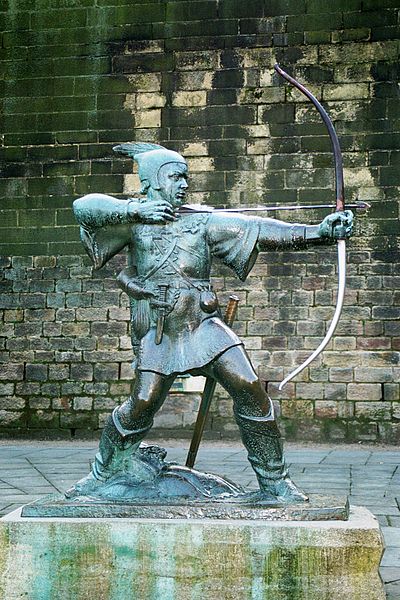
Image: Robin Hood Memorial from Wikimedia Commons. Web Source.

Wednesday, April 11, 2018

Week 12 Reading B: Sir Lancelot and the Five Hundred Knights

  • Lancelot went through the forest and met hermits after a Knight stole his horse and helm; had an adventure and got them back
  • Learned from a hermit that Galahad was his son, and that Galahad sat in the Siege Perilous at the Feast of Pentecost
    • Siege Perilous was seat at Round Table reserved for the person who would retrieve the Holy Grail, and was said to kill anyone else who would sit in it
  • Sir Lancelot then came to a castle where 500 knights fought
    • Near the castle were knights in black, and the others were knights in white
  • Since the black knights were faring worse, Lancelot joined their side
    • He always takes the side of the weak
  • White knights tired Lancelot out and took him away into the forest
  • Lancelot was shamed by his loss, and was "persuaded that [he was] more sinful than ever [he] was."
  • Rode until he reached a chapel, where a nun inquired as to his name and quest
  • Lancelot answered
  • The nun tells Lancelot that the tournament was symbolic
    • Black knights were unpurged sins while white knights were those of holiness
    • Lancelot went to aid the sinners when they were overcome, which caused his loss
    • Nun warns Lancelot of his "vain-glory" and pride
    • Tells him that "among earthly sinful Knights [he is] without peer."


Bibliography: An Adventure of Sir Lancelot from King Arthur: Tales of the Round Table by Andrew Lang. Web Source.

Image:  Combat de chevaliers dans la campagne by Eugène Delacroix on Wikimedia Commons. Web Source.

Tuesday, April 10, 2018

Week 12 Reading Notes A: The Drawing of the Sword


  • Uther Pendragon died without anyone to take over
  • All Knights hoped to seize the crown for themselves
    • All/most of the knights wanted power rather than to protect the people
    • Knights focused more on trying to become King than to help the people
  • Merlin rode to the Archbishop of Canterbury and summoned all the lords and gentlemen of Britain to London on Christmas
  • Large stone with a bar of steel on top with a sword inside, inscribed with the words: "Whoso pulleth out this sword is by right of birth King of England"
  • Many tried to pull the sword but failed
  • Knights decided that all had a right to try and win the sword, and held a tournament
  • Sir Ector, a Knight, brought his son Kay and foster-son Arthur
  • Kay forgot his sword and sent Arthur back for it
  • House was locked up and Arthur couldn't get in, so he went and took the sword in the stone
    • Somehow Arthur was unaware that the sword was the sword of selection?
  • Arthur brings sword to Kay, who brings it to his father Ector
  • After Ector is told of what happened and Arthur returns the sword and draws it again, he and Kay kneel for Arthur
  • They tell the Archbishop, and prove the feat to him and everyone who comes to watch (on Candlemas, when more Knights and others are present)
  • Arthur is crowned king

  • For story: Make the person who pulls out the sword not Arthur
    • Instead of right of birth, Merlin makes the sword go to the person who is most fit to lead the country
    • Arthur is aware of what the sword is
      • Ector knew of Arthur's heritage and told him, so Arthur believed that he was the rightful king
      • Instead of taking the sword for Kay, he takes advantage of everyone being gone and tries to pull the sword
      • Fails
      • Arthur doesn't want power for power's sake, but still believes it is his birthright and is confused at the failure
    • Another named Artus is the true ruler
      • Artus is in the square later that evening
      • Hears someone getting assaulted nearby, draws sword and goes to protect them
      • Many see him pull the sword and follow, watching him protect a peasant from being assaulted by a noble's soldier


Bibliography:

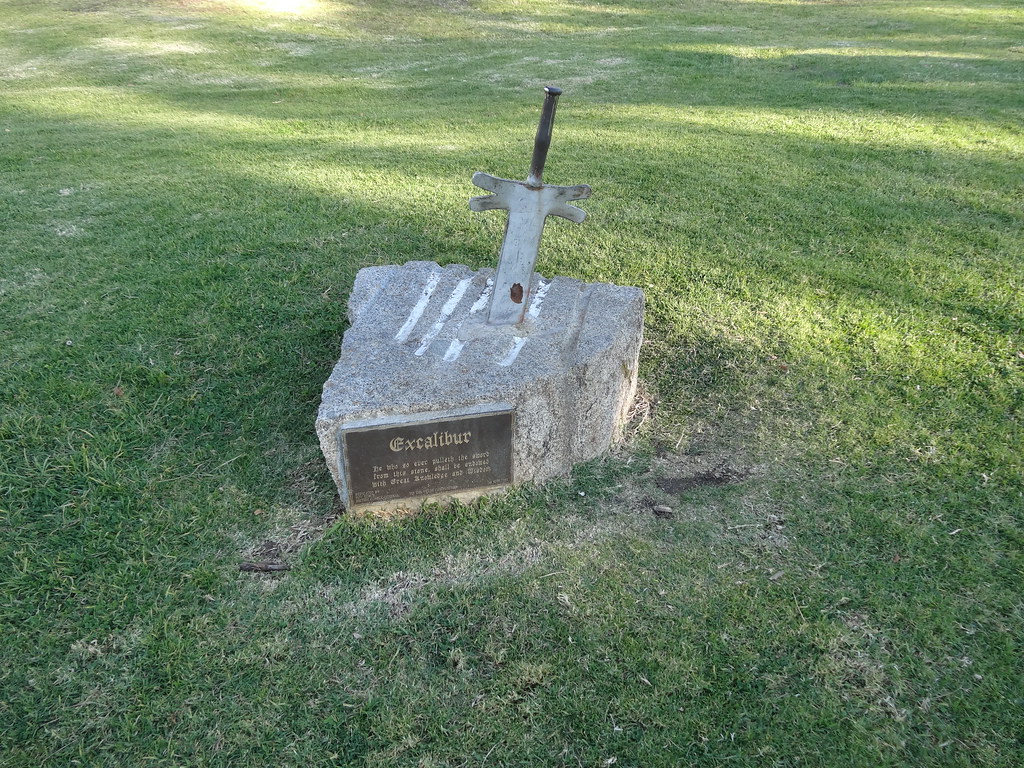
Image: Excalibur Sword in Stone among the Celtic Standing Stones at Glen Innes New England by denisbin on flickr. Web Source.

Wednesday, April 4, 2018

Reading Notes B Week 11: The Snake Boy & The Snake Man

  • Snake Boy
    • Boy who went bird hunting every day and brought birds back to grandmother
    • Family was jealous
      • of Grandma for getting birds brought to her? of Boy for grandmother's affections?
    • Family treated boy so bad that he told grandma he would leave
    • Left without eating breakfast and returned in the evening with a pair of deer horns
    • Told grandma he had to be alone in the hothouse, so she left to go into the house with the others
    • Grandma came back at daybreak and saw a massive snake with horns on its head with two human legs in place of a tail
    • Boy told her to leave, and crawled out (long period of time) of the hothouse.
    • Crawled through settlement leaving a trail until it reached the river and went in
    • Grandmother grieved despite boy having told her not to grieve for him
    • Family got upset, told her that if she thought so much of him she should go join him
    • Grandmother follows trail and walks into river
    • Once afterward, man sees her sitting on a rock in the river, but she jumps in the water as soon as she sees him
  • Snake Man
    • Two hunters under a taboo not to eat squirrel or turkey
    • Go into woods, light a fire to prepare supper once evening comes
    • One killed several squirrels during day and prepared to eat them
    • Other warned him not to break taboo or he'd turn into a snake
    • Hunter ignored warning and ate squirrels
    • Later in the night, hunter was rolling around in agony with his lower body having turned into the body and tail of a water snake
    • Other hunter could not help, and could only watch as first hunter slowly turned into a snake
    • Snake hunter finished turning into snake and crawled into river


Bibliography: "The Snake Boy" and "The Snake Man" from Myths of the Cherokee by James Mooney. Web Source.

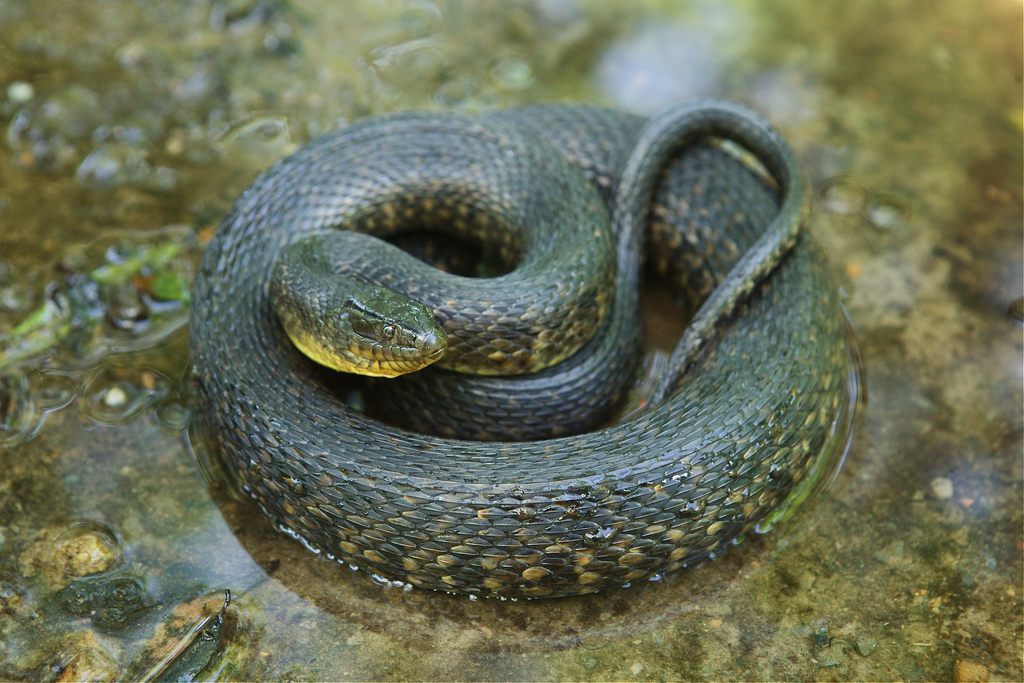
Image: Mississippi Green Water Snake by John Sullivan on Wikimedia Commons. Web Source.

Reading Notes A Week 11: The First Fire

  • World was cold in the beginning
  • The Thunders sent lighting and created a fire in the bottom of a hollow sycamore tree on an island
  • Animals saw smoke and knew the fire was there, could not reach because of water
  • Animals wanted to go after fire
    • Raven flew to the sycamore tree, but the heat scorched his feathers black and he retreated
    • Screech-owl went but nearly got eyes burned out, eyes got turned red
    • Hooting Owl and Horned Owl got white rings about their eyes from the ashes
    • Uksu'hï snake (black racer) went through the water and a small hole at bottom of tree, but got scorched black by the hot ashes and from then on had the habit of doubling back on his tracks "as if trying to escape from close quarters"
    • Gûle'gï ("The Climber") swam over and climbed the outside of the tree, but fell in when smoke choked him and also turned black
  • Animals held another council but all were afraid of the burning tree
  • Känäne'skï Amai'yëhï (Water Spider) volunteered
  • She wove a tusti bowl and carried it to the island, and put a coal of fire into the bowl
  • Water Spider brought back the coal and brought the world fire

Bibliography: The First Fire from Myths of the Cherokee by James Mooney. Web Source.

Image:  Ring of Fire from pixabay by geralt. Web Source.

Sunday, April 1, 2018

Week 10 Extra Credit Reading: The Jealous Father

  • Aioswé had two wives
    • Polygamy was accepted by the Cree?
  • Had one son by one of the wives
  • Aioswé was jealous of his son
    • Jealous of...? Wife's attention, something else?
  • Aioswé found marks on one of his wives (not the son's mother) which made him believe son had been intimate with her
  • Aioswé went to an island with his son to hunt eggs, and kept sending the son further and further inland for eggs until the son went far enough that Aioswé could paddle away in the canoe and leave the son behind
  • Son cried for hours until Walrus appeared
  • Walrus offered help, but asked son to warn Walrus if he heard thunder because he had to go underwater if lightning came
  • Son lied about sky (was cloudy, said it was clear) and then about a peal of thunder
  • Walrus heard thunder again and got angry at Aioswé's son and dropped him
  • Water was already shallow and boy lived, but Walrus was killed by lightning
  • Aioswé's father had sent storm, Aioswé's mother had sent Walrus
    • Father was on Aioswé's side, Mother was on the son's side
  • Old woman sent by Mother gave the son instructions on how to act if he wanted to reach home
  • Gave him a stuffed ermine skin as a 'weapon to protect himself'
  • Son came across a wigwam with two blind old hags who used to kill everybody they met(sent by his father)
    • Aioswé or Aioswé's father? Latter sent the thunder storm, but "his father" implies Aioswé, the son's father
  • Son is suspicious of hags when they invite him in
    • Because of their elbows - hags are mentioned to have "sharp bones like daggers protruding from the lower arm at the elbow"
  • Son tricked hags into killing each other by putting a piece of parchment on a pole and poking it between them
  • The two hags slashed at the parchment with their elbows and ended up stabbing each other to death
    • Hags can sense son's approach with magic but can't sense that he didn't actually sit between them?
  • Son proceeds and comes across bones on the path (trap by people nearby, who would kill whoever disturbed the bones)
  • Son's advice from the old woman had been to dig a tunnel underneath the bones
  • Son was careless, accidentally rattled the bones while digging
  • People gave up searching when they could not find the son underground, but dogs kept searching until they found the hole
  • Aioswé's son used the stuffed ermine skin to trick the people into thinking the dogs had lied about it being the son, and the people killed the dogs
    • Apparently the people and dogs were specifically after the son as well? Does not mention that they were sent by anyone, though
  • The son returned home
  • Son sang a song about the burning of the world, Aioswé sang against him but was not strong enough
  • Son shot an arrow into the woods and set them on fire
  • When Aioswé argues that son did not set the water on fire (like he had said he would - "make all the lakes and rivers boil"), the son shot an arrow into the water and made it boil
  • Son told his father that he would be safe from the fire in the fat basket (basket with bear's grease in it)
  • Son put his mother in a circle and she was safe, while Aioswé burned to death in the basket
  • Son and his mother transformed into birds, mother into a robin and son into a whisky jack
    • Escaping the world? Fed up with humans? No motivation given besides "Let us become birds"
    • Other wife is ignored besides a mention in beginning and a mention when the son returns

Bibliography: The Jealous Father from Tales of the North American Indians by Stith Thompson.

Tuesday, March 27, 2018

Week 10 Reading A: The Jealous Uncle

  • Unnatural Uncle who would kill nephews when they become a few years old, two already dead
    • No explanation for why he does so? Later on seems to see his nephew as a threat to his life, but no reason given for this idea
  • Aunt went to mother and told her to hide the gender of another boy if he's born
  • Worked for a time, but Uncle discovered that the son was a boy
  • Boy takes old playthings of his brothers
    • Piece of a knife, eagle-down, and a sour cranberry
  • Uncle takes the boy to go fetch wood, and traps him in a log
  • Boy rubs sour cranberry on inside of log and the log 'opened its mouth', freeing him
  • Uncle is surprised and annoyed at the boy continuing to live (and coming back with wood), and swears to his wife that he will kill the boy
  • Uncle takes boy out to get ducks and eggs, leads him to a steep bluff and pushes him down
  • Boy uses eagle-down to drift down, retrieves ducks and eggs, and goes up by blowing at eagle-down
  • Uncle is furious at boy's return again
  • Uncle takes boy to go get clams, pushes boy into large clam
  • Boy uses piece of knife to cut clam's ligament until it lets him out and comes back with clams
  • Uncle makes a box for the boy and makes him go inside; Uncle closes the box, ties it shut, and throws him into the ocean
  • After a long time, boy is rescued by two girls of the Eagle people who can put on and take off eagle skins to transform from human to eagle and back
    • While discussing the box (before they know he is inside), younger daughter claims the box but the elder daughter claims the contents 
  • Elder daughter of the village chief claims the boy and they marry happily
  • Boy returns to his village after he misses his parents, using the chief's eagle-skin to fly home
  • He hunts a whale and puts it on the beach
  • Uncle took control, not allowing any whale meat to be given to the boy's parents
  • The boy, in eagle form, swoops at the Uncle multiple times, getting closer each time until he grabs the Uncle the fourth time and brings him to a cliff
  • Transforming back, the boy tells the uncle that he will be punished for treating his parents cruelly
    • Uncle will be dropped in ocean and only has chance to live by swimming back to shore
    • Uncle cannot swim, begs to be taken back
  • Boy returns to his parents and brings them back to Eagle land with him

Bibliography: The Jealous Uncle from Tales of the North American Indians by Stith Thompson. Web Source

Image: Wild Bald Eagle Ocean by KetaDesign on Wikimedia Commons . Web Source

Tuesday, March 13, 2018

Reading Notes B Week 9: The Three Evils


  • Dschou Tschu
    • Very strong and often got into fights due to his personality and lack of discipline
    • Elders did not punish him
      • Fear, or knew that he didn't intend to cause trouble?
  • New mandarin arrived and listened to people's complaints
  • Learned of three great evils
    • Evil dragon at the bridge
    • Tiger with white forehead in the hills
    • Dschou Tschu
  • New mandarin went to Dschou Tschu's door, clothed in poor garments
  • Dschou Tschu laughed at the idea of people being distressed
    • Revolt happening in country around, but the village is doing well and is peaceful
  • Mandarin agrees but points out that people still complain about three great evils
  • Mandarin tells Dschou Tschu that he wishes to ask him to dispose of the first two, but hints that he should keep the third hidden from Dschou Tschu
  • Dschou Tschu falls for bait, asks to hear all three
  • He is ashamed to hear that he is considered one of the great evils and tells the mandarin to return home
  • Goes and kills the tiger and dragon, reports to the mandarin
    • Tells the mandarin that he will leave and that the elders no longer need to be sorrowful about him
  • Enlists as a soldier and makes a name for himself until he faces unbeatable odds, and then allows himself to die

Bibliography: The Three Evils from The Chinese Fairy Book, ed. by R. Wilhelm and translated by Frederick H. Martens

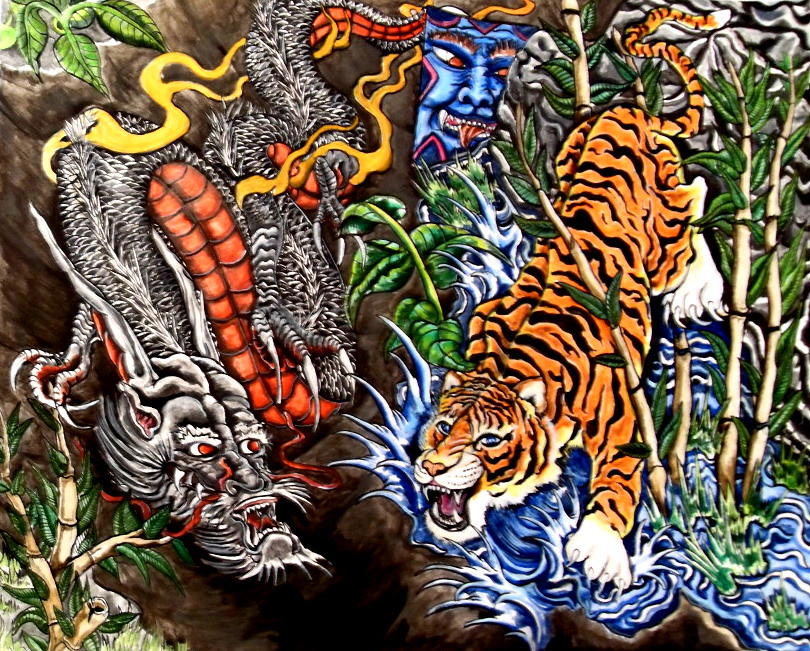
Image: Dragon vs Tiger by David Davis on flickr

Reading Notes A Week 9: The God of War


  •  Story:
    • Guan Yu made a pact of friendship with Liu Be and Dschang Fe
    • Swore oath in a peach-orchard to be brothers and sacrificed a white steed to seal it
    • Aided in subduing the Yellow Turbans
    • When Tsau Tsau convinced Liu Be's enemies to take their city by treachery, Guan Yu led an army to retake the town but was captured in an ambush along with his son
    • When he could not sway Guan Yu to his side, the prince of that country (the enemies) slew Guan Yu and his son
      • Red Hare stopped eating and died once Guan Yu died
      • Dschou Dsang and other faithful followers of Guan Yu also died upon hearing of Guan Yu's death
    • A monk who was an old acquaintance saw Guan Yu after his death, along with his son Guan Ping and Dschou Dsang
    • Guan Yu wanted his head back (to come back to life), but monk told him that all the people Guan Yu killed would also want that if Guan Yu got his way
    • Guan Yu disappeared and acted as a god thereafter, appearing whenever a new dynasty was founded
    • His worship increased over time
      • Prince Guan
      • King Guan
      • Great god who conquers demons
      • Divine "Helper of the Heavens"
    • Known as the God of War
    • Worshiped as the Master of War alongside Confucius, the Master of Peace
  • Guan Yu:
    • Also known as "The God of War, Guan Di"
    • Held a great love for his country
    • Faithful, honest, and brave
    • Owned the horse Red Hare
      • Red Hare "could run a thousand miles in one day"
    • Owned Green Dragon, a knife "shaped like a half-moon"
    • Was handsome in appearance
      • Had a red face
      • Had a beard so long it went down to his stomach
    • Could take on thousands with ease
    • Inspired loyalty in others
      • Dschou Dsang and others died (committed suicide?) when they heard of Guan Yu's death

Bibliography: The God of War from The Chinese Fairy Book, ed. by R. Wilhelm and translated by Frederick H. Martens. Web Source

Image: Guan Yu Figurine on PXHere.

Wednesday, March 7, 2018

Week 8 EC Reading Notes: Stories from Le Morte D'Arthur and the Mabinogion (A)

Of Arthur's Birth; And How He Became King

 Disneyland Sword in the Stone, by Dave Q from Wikimedia Commons
  • Uther Pendragon ruled Britain
  • Fell in love with Igraine of Cornwall, got rejected and fell ill
  • Merlin offers to help Uther if Uther's son is given to him at the son's birth
  • Uther agrees and Merlin gives Uther "the form of one whom Igraine had loved dearly"
    • Igraine then marries Uther
  • Merlin shows up to remind Uther about the deal 3 days before Arthur is born
  • When Arthur is born, Uther commands for him to be taken to the 'postern-gate' to be given to an old man (Merlin)
  • Uther fell sick not long after, gathered all his knights and barons and commanded them to obey his son
    • By Merlin's suggestion
    • Also says that his curse would be on his son if Arthur didn't take the throne
  • Few people had seen Arthur, and were unwilling to be ruled by a child
  • Civil war erupted
  • Merlin had taken Arthur away to keep him safe from the upcoming civil war (which he had foreseen)
  • Merlin gave Arthur to Sir Ector to raise alongside Ector's son Kay
    • Didn't tell Ector that Arthur was Uther's son
  • When Arthur was older ("tall youth"), Merlin advises the Archbishop of Canterbury and told him to call together "all the chief men of the realm"
    • Merlin put a curse on the Archbishop to get him to comply
  • When the men gathered, they saw a sword thrust through an anvil on a giant stone in front of the church
    • Stone had "Whoso can draw forth this sword, is rightful King of Britain born" written on it
  • Everyone present tried and failed to draw the sword
  • Jousts were to be held in London at Easter for knights to show off their skill and try to draw the sword
  • Ector rode to London with Kay and Arthur
  • Kay and Arthur rode out, but Kay forgot his sword
  • Arthur went back but the house was locked up
  • Arthur thought of the sword in the stone and went to grab it
    • Guards were gone due to tournament
  • Arthur draws the sword and brings it to Kay, who shows it to Ector
  • Ector and Kay pledge loyalty to Arthur
  • They go to Archbishop and tell him what happened
  • Arthur puts sword back in and draws it twice
    • Others try to draw it after Arthur puts in back in the second time, but all fail again
  • Arthur is sworn in as king
---------

(Reading is from Coming of Arthur up to How the Scabbard Was Lost)

Bibliography: Of Arthur's Birth; And How He Became King from Stories from Le Morte D'Arthur and the Mabinogion by Beatrice Clay. Web Source.

Sunday, March 4, 2018

Week 7 EC Reading: The Gilgamesh Epic


The Birth of Gilgamesh (No Notes, not a specific story)

Eabani (No Notes, not a specific story)

Gilgamesh as Tyrant:
  •  Gilgamesh fulfilling "double rôle of ruler and oppressor" of Uruk
    • Pressed young men into service in building a wall
    • Takes women to his court
  • People pray to the gods, specifically goddess Aruru, to make a hero who would force Gilgamesh to treat them better out of fear
  • Aruru takes a piece of clay and casts it upon the ground, creating Enkidu
  • Enkidu was covered with hair, had long luxurious hair
  • Enkidu lived in harmony with wild animals, and knew nothing of the land or of people
The Beguiling of Eabani:
  •  Hunter named Tsaidu encountered Enkidu
    • Possibly sent by Gilgamesh to entrap Enkidu and bring him back to Uruk
    • Possibly completely accidental
  • Tsaidu returns to Uruk and tells Gilgamesh about Enkidu
    • Enkidu was strong and fleet, but also shy at sight of another human
  • Gilgamesh seems to know why Enkidu was created, and wants to go against the gods' plans
  • Sends Tsaidu back to the mountains with Ukhut, a sacred woman of the temple of Ishtar, to seduce Enkidu and convince him to return to Uruk with her
  • Ukhut's beauty enthralls Enkidu, and he spends a week with her
  • Realizing he no longer belonged with the beasts, Enkidu goes along with Ukhut when she tries to convince him to go to Uruk and meet with Gilgamesh
    • He finds the idea of befriending Gilgamesh delightful
Gilgamesh Meets Eabani:
  • Feast of Ishtar was happening when the trio (Enkidu, Ukhut, Tsaidu) returned to Uruk
  • Enkidu thought that he would have to fight Gilgamesh before befriending him, but refrained through a warning that Gilgamesh was stronger than him
    • Warning could have been a dream or from Ukhut
  • Meeting is not detailed, but Enkidu and Gilgamesh meet and become friends
  • Enkidu laments loss of former freedom, aims his hate at Ukhut
  • Shamash (sun-god) talks to Enkidu and convinces him of the benefits
    • Unclear if dream or vision
    • Shamash talks of the benefits Enkidu already has, and tells Enkidu that Gilgamesh will provide Enkidu with a wonderful couch to sleep on and give Enkidu a seat at his left hand
  • Enkidu stops being upset at his current situation
  • Enkidu then receives a vision/dream about Khumbaba, a monster in the Forest of Cedars
    • Khumbaba was also a "guardian of the abode of the goddess Irnina (a form of Ishtar)"
  • Gilgamesh and Enkidu go to the priestess Rimat-belit (Gilgamesh's mother) and seek protection from Shamash for their adventure
The Monster Khumbaba:
  •  Khumbaba:
    • Terrifying creature that saps the strength and vitality of any who enter the forest
    • Bel appointed Khumbaba to guard a specific cedar tree
  • Enkidu complains that he feels weak upon nearing the forest, but Gilgamesh encourages him
  • The pair receive a dream foretelling of Khumbaba's death when they enter the forest and go forth, successfully slaying Khumbaba
Ishtar's Love for Gilgamesh:
  • Gilgamesh and Enkidu returned to Uruk victorious
  • Gilgamesh dressed himself in kingly clothes upon their return
  • Ishtar fell in love with Gilgamesh after witnessing him, and proposed to Gilgamesh
    • She promised many gifts if he did so - increased flocks and herds, "his horses and oxen would be without rival", other kings/princes would bring tribute to him
  • Gilgamesh rejected and taunted Ishtar due to her past treatment of lovers
    • Tammuz, "to whom she clung weepingly year after year"
    • Alalu the eagle
    • "A lion perfect in might and a horse glorious in battle"
    • Tabulu, a shepherd
    • Isullanu, the gardener of Ishtar's father
  • Ishtar had treated her previous lovers poorly and mocked them
    • Gilgamesh believed that he would be treated similarly if he accepted Ishtar's proposal
  • Ishtar was furious at the rejection and went to her father Anu
    • Seems as if she lied and made it sound as if Gilgamesh tried to court her instead of the other way around
The Bull of Anu:
  • Ishtar begged her father to send a mighty bull against Gilgamesh
  • Anu refused at first due to the fact that it would cause "seven years' sterility on the earth", but eventually agreed
  • Great bull, Alu, was sent to battle Gilgamesh
  • Text about the battle is missing but Gilgamesh was able to finally kill the beast
  • Ishtar went onto the wall of Uruk and cursed Gilgamesh for angering her and killing the bull from heaven
  • When Enkidu heard the curse, he tore out the entrail of the bull and threw them in front of Ishtar, telling her:
    • "As for thee, I will conquer thee, and I will do to thee even as I have done to him"
    • Direct threat that Enkidu will kill Ishtar
  • Gilgamesh dedicated the horns of the bull to the sun god and returned to Uruk
  • Possible that Enkidu was sent a dream in which Ukhut (who was now dead) told him of the underworld (Hades)
    • Described as "a path whose way has no return", place where inhabitants are cut off from light, and only dust exists without food or water
File:Near Eastern - Cylinder Seal with Enkidu Vanquishing the Bull of Heaven - Walters 42786 - Side B.jpg
The Death of Eabani:
  •  Enkidu falls ill and dies twelve days later
    • Possible that Enkidu was wounded
    • Possible that Enkidu was cursed to die outside of battle, likely by Ishtar
  • Gilgamesh grieves Enkidu's death
The Quest of Gilgamesh:
  • Gilgamesh became terrified of death and went in search of Ut-Napishtim, his ancestor who might know of a way for Gilgamesh to escape death
  • Gilgamesh set out and had to pass through mountain gorges full of wild beasts
    • Sin, the moon-god, helped him make it through safely
  • Gilgamesh arrived at the mountain Mashu ("the Mountain of the Sunset") which lay between the earth and the underworld on the western horizon
  • The entrance was guarded by scorpion-men (monsters)
  • Gilgamesh was overcome by fear when he saw them, but answered their questions about why he came
    • Scorpion-men only didn't kill him due to his divine heritage
  • Scorpion-men advised he turn back when they learned he sought Ut-Napishtim
  • They told Gilgamesh that he would have to go through twenty-four hours of darkness until he re-emerged into the light of day, and refused to let him pass
  • Gilgamesh begged them (with tears) to let him through, and they eventually did so
  • Gilgamesh ended up in a garden of trees that carried precious stones as fruit and leaves (?)
  • Gilgamesh encountered the sea-goddess Sabitu, who retreated into her palace and shut the gate
  • He threatened to break down the door until she opened it and aided him
    • Gilgamesh knew that her help was necessary to reach Ut-Napishtim
  • She sent Gilgamesh to Adad-Ea (Ut-Napishtim's ferryman)
  • Adad-Ea advised Gilgamesh to turn back as well, but agreed when Gilgamesh started destroying Adad-Ea's boat with an axe
    • Adad-Ea forced Gilgamesh to go find a new rudder before they set off
Gilgamesh and Ut-Napishtim:
  • Gilgamesh contracted a grievous illness and could not leave the boat when they arrived at Ut-Napishtim's home
  • Gilgamesh didn't believe Ut-Napishtim when he tried to tell Gilgamesh that death was the fate of mankind and controlled by the gods
  • Ut-Napishtim told Gilgamesh the story of the Babylonian Deluge Myth

Deluge Myth (No Notes, not a story I will focus on)

Gilgamesh and the Plant of Life (no section header in source):
  • Deluge myth proved to Gilgamesh that unlike his previous belief, his situation was not the same as his ancestor's
    • Ut-Napishtim was given the blessing of Bel after he saved humanity when Bel wanted to flood the world, due to Bel being convinced by the other gods that his actions were an overreaction
  • Ut-Napishtim took pity on Gilgamesh and healed him
    • Gilgamesh slept for a week
    • Ut-Napishtim's wife made a magic "preparation" with seven ingredients and gave it to Gilgamesh
    • When Gilgamesh woke, Ut-Napishtim sent him to a magic spring to finish healing him
  • Gilgamesh returned and was still insistent on his quest for immortality
  • Ut-Napishtim sent Gilgamesh with Adad-Ea to the location of the plant of life
    • Plant would give immortality and eternal youth to whoever ate it
    • Plant was a weed at the bottom of the ocean that would prick the hands of the gatherer
  • Gilgamesh found the plant of life and set out to return to Uruk, accompanied by Adad-Ea
  • When Gilgamesh stopped at a well of fresh water, a snake stole the plant and Gilgamesh wept at the loss
Eabani's Spirit (no section header in source):
  •  Gilgamesh still grieving Enkidu's loss
    • "Thou canst no longer stretch thy bow upon the earth; and those who were slain with the bow are round about thee. Thou canst no longer bear a sceptre in thy hand; and the spirits of the dead have taken thee captive. Thou canst no longer wear shoes upon thy feet; thou canst no longer raise thy war-cry on the earth. No more dost thou kiss thy wife whom thou didst love; no more dost thou smite thy wife whom thou didst hate. No more dost thou kiss thy daughter whom thou didst love; no more dost thou smite thy daughter whom thou didst hate. The sorrow of the underworld hath taken hold upon thee."
    • Implies Enkidu had a wife and daughter? Love-hate relationship with the wife and daughter, or just pointing out that Enkidu can no longer show love or anger towards his closest family members?
  • Gilgamesh went to multiple temples to pray for Enkidu's return
    • Ninsum, Bel, Sin
  • Eventually Ea took pity on Gilgamesh and persuaded Nergal to bring forth Enkidu's spirit from Hades
  • Enkidu couldn't tell Gilgamesh what he'd seen in the underworld but could describe the general conditions
    • People who were taken care of properly (buried, offerings made) and/or slain in battle have ideal afterlives
    • People who were not either have miserable afterlives
-------------

Bibliography: The Gilgamesh Epic from Myths & Legends of Babylonia & Assyria by Lewis Spence. Web Source

Image: Near Eastern - Cylinder Seal with Enkidu Vanquishing the Bull of Heaven - Walters 42786 - Side B, anonymous artist from the Middle East, from the Walters Art Museum. Image Web Source

Tuesday, February 27, 2018

Reading Notes A: The Miraculous Mirror


File:Amaterasu.png

  • Amaterasu:
    • Sun Goddess
    • Weaves the "dark web of Doom" with seven hand-maidens
    • Scared of Susa-no-wo, fled upon his arrival
  • Susa-no-wo:
    • "Dragon of hell", "Demon of Fire"
    • Showed up in the Hall of the Gods and caused Amaterasu to flee
  • Some god crafted a mirror of gold
  • Uzume:
    • Goddess of laughter
    • Danced and frolicked outside of Amaterasu's cave until Amaterasu awoke
    • Used gold mirror to get Amaterasu to leave the cave
  • Amaterasu looked in mirror, saw herself but thought it was a rival; ran out of the cave 
  • Taji-Karaô blocked cave with a boulder


  • Idea: make into a myth about why the sun disappears every night
    • Find a deity of stars, have him become the antagonist
    • "Boy who cried wolf" type story, until star deity follows up on threats and actually brings Susa-no-wo to attack Amaterasu
    • Thereafter, deity of stars comes to the Hall of the Gods every night, and Amaterasu flees until she knows that the stars are gone
    • Include Uzume: person who tells Amaterasu when star deity is gone?
      • Could also replace with a rooster-related deity - crow of the rooster signifying daybreak

Bibliography: The Miraculous Mirror from Romance of Old Japan, Part I: Mythology and Legend by E. W. Champney and F. Champney. Web Source

Image: Amaterasu by TI.A on Wikimedia Commons

Wednesday, February 21, 2018

Reading Notes B: What Caused the Shadows on the Moon


  • Family of deities - 3 daughters, 1 son
    • Daughters: Ka Um (water), Ka Ding (fire), Ka Sngi (Sun)
    • Son: U Bnai (Moon)
  • Sun and Moon considered more beautiful/lovely than the elder sisters (Water/Fire)
  • Moon became wayward as he grew up
    • Came and went without telling mother and sisters
    • "Consorted" with people far beneath him in rank
  • Mother and sisters tried to get him to be more respectable but Moon was arrogant and ignored them
  • Moon spent a long time with goblins and evil
  • When he returned home, Moon was dazzled by Sun's beauty and asked for her hand in marriage from his mother because the only one who could rival her beauty was himself
  • Mother dismissed Moon from her presence, and Sun threw hot ashes into Moon's face
  • Ashes burnt Moon so bad that the marks scarred his face, causing the shadows on the moon and preventing the Moon from showing his face in the day-time
Full Moon near Snowcap Mountain, AhmedRadwan on Pixabay
  • Potential: bring in Ka Um and Ka Ding, taking sides between Ka Sngi and U Bnai - make the dispute more equal on each side
    • Take out the marriage proposal and the explicit terribleness of how U Bnai acted
    • Make dispute about U Bnai's willingness to spend time with people of lower rank
    • Ka Um sides with U Bnai, shocking the rest of the family, while Ka Ding sides with mother and Ka Sngi
    • Results in association of fire with the sun and water with the moon
      • Fire refusing to ever be in the same place as water (i.e. water puts out fire) and the moon and sun perpetually avoiding each other 
      • The sun and the fire still live together (the sun is a giant ball of fire) and Ka Um follows U Bnai's lead (moon controls the tide)


Bibliography: What Caused the Shadows on the Moon from Folk-Tales of the Khasis by Mrs. K. U. Rafy. Web Source

Tuesday, February 20, 2018

Reading Notes A: The Legend of the Iei Tree

  • Iei Tree is a famously large tree, shadow is so dense that sun can't get through at all and earth below is barren
  • Iei continues to grow, spreads shadow further and further and begins to menace the world
  • People flee shadow of Iei
  • Woodcutters go to cut it down
  • Every night, damage to tree is repaired and woodcutters begin despairing
  • Kha Phreit, Khasi wren (little grey bird), comes to woodcutters
  • After lambasting the woodcutters for laughing at her offer of help, Kha Phreit tells the cutters that U Khla (big tiger) licks the tree to heal it every night
  • Woodcutters leave their axes in the tree blade out, and U Khla cuts his tongue on the blades and flees
  • Woodcutters are able to cut down the tree
Climbing White Tiger, Dean Croshere on flickr
  • Story Idea: switch to modern setting
    • Futuristic, plants are considered 'exotic' - only exist in parks and as decorations
    • Iei Tree begins to grow in a city park, is considered a tourist landmark at first
    • Keeps growing, begins to shade city, effects begin
      • Instead of shade that causes barren earth, Iei Tree makes the land below "mythical" - summons forth dragons, talking animals, etc.
      • This stops early attempts to chop tree down, chaos from dragons and other powerful creatures prevent them from discovering the Iei Tree as the cause at first
      • By the time Iei Tree is discovered as cause, is already big enough that the city has been abandoned and various powerful creatures simply make their home there
    • Iei Tree spreads to cover nearly an entire continent
    • Team of scientists accompanied by a military team go in to investigate and try to take down the tree
    • All attempts fail
      • Cutting it down results in damage repairing before their eyes
      • Attempts to poison/burn tree down simply fail; tree doesn't catch, poison just vanishes
    • Kha Phreit (still talking grey bird) tells them that U Khla, a magical large tiger, lives in the Iei Tree's branches
      • U Khla is provided for by the tree
      • Can use magic, heals the tree from attacks
    • Team confronts U Khla, and U Khla tells them that if the Iei Tree falls, all the mythical creatures die
    • End story on hopeful note, with humans and mythical creatures trying to find a solution that doesn't result in humanity's extinction

Bibliography: The Legend of the Iei Tree from Folk-Tales of the Khasis by Mrs. K. U. Rafy.  Web Source